Gallery News
William Kentridge / The Nose
In March 2010, William Kentridge will be the first South African to direct an opera at the Metropolitan in New York, one of the premiere performance spaces in the world. Kentridge’s bold choice for this prestigious occasion is the little known avant-garde Shostakovich opera, The Nose.
The invitation to direct The Nose follows Kentridge’s productions of Monteverdi’s Il Ritorno d’ Ulisse and Mozart’s The Magic Flute, both of which had seasons in South Africa. There has been considerable excitement in the global art community about this new production, and much interest in Kentridge’s experimental studio preparations. Kentridge’s designs, drawings, and projections add a powerful third dimension to this complex and enigmatic opera, Shostakovich’s interpretation of a short story by the great Russian writer and fabulist, Nikolai Gogol.
William Kentridge / Five Themes / MOMA (New York)
William Kentridge: Five Themes, a comprehensive survey of the artist’s oeuvre curated by Mark Rosenthal, will be on view at the Museum of Modern Art (New York) from 24 February 24 through 17 May 2010.
This large-scale exhibition of the work of the internationally renowned South African artist William Kentridge (b. 1955) spans nearly three decades of his remarkably prolific career, with an emphasis on projects completed since 2000. Many of these have never before been publicly exhibited in the United States. Combining the political with the poetic, Kentridge’s work has made an indelible mark on contemporary art. Dealing with subjects as sobering as apartheid and colonialism, Kentridge often imbues his art with dreamy, lyrical undertones or comedic bits of self-deprecation, making his powerful messages both alluring and ambivalent. Perhaps best known for his stop-motion films of charcoal drawings, the artist also works in prints, collage, sculpture, and the performing arts—opera in particular. This exhibition explores five primary themes in Kentridge’s art through a comprehensive selection of his work from the 1980s to the present. Included are works related to the artist’s staging and design of Dmitri Shostakovich’s The Nose, which premieres at New York’s Metropolitan Opera in March 2010.
‘Five Themes’ has previously been on exhibition at the Museum of Modern Art (San Francisco), 14 March through to 31 May 2009, and at the Norton Museum of Art (West Palm Beach) from 7 November 2009 through to 17 January 2010.
The Armory Show / 03.03.2010–07.03.2010
The Goodman Gallery will be exhibiting at the Armory Show (Pier 94, Booth 933), New York (03.03.2010–07.03.2010). Among the artists exhibiting are: Kudzanai Chiurai, David Goldblatt, Frances Goodman, William Kentridge, Thomas Mulcaire, Joachim Schönfeldt, Mikhael Subotzky, Gavin Turk, Minnette Vári. the armory
Joachim Schonfeldt's Four Musicians (moo, roar, chee-ow & yeeeoh) premiers at the Armory show 2010
Four Musicians (moo, roar, chee-ow & yeeeoh)
‘… a musical piece to be performed by musicians. The backdrop is important. It is the inspiration for the composition of the musical piece, the gusto of its performance and also its “speech”.’ – Okwui Enwezor
Four Musicians (moo, roar, chee-ow & yeeeoh) is a performance and sculpture by Joachim Schonfeldt, based on the German folklore tale of the Bremen Town Musicians, as recorded by the Brothers Grimm. In the original tale, a cat, a donkey, a rooster and a dog, past the primes of their lives, leave their masters’ homes, band together and set off on an adventure to Bremen, proving that the whole is stronger than the sum of its parts.
The tale has been retold and interpreted many times in popular culture (film, animation, theatre, literature) and has been represented by a number of contemporary artists (including Maurizio Cattelan).
Four Musicians (moo, roar, chee-ow & yeeeoh) the sculpture substitutes the donkey, dog, cat and rooster with taxidermied animals: an indigenous Nguni cow, a lioness and a vulture – all symbols of African pride and power. The sculpture rests on a base resembling a traditional Zulu shield, in reference to the theme of conflict and security. Schonfeldt also stacks the animals from large to small – an effective inversion of power relations.
The sculpture functions as a backdrop to a performance of original music by James French executed by four musicians stationed opposite the sculpture and playing a selection of cornet, trumpet, trombone, french horn, baritone or tuba. These wind instruments infuse or breathe life back into the inanimate objects or animals.
The artist states:
‘The piece performed by the musicians is in essence the work. I anticipate it to be a bit like the idea of ‘windjammers’, an American circus concept that describes the intensity of the music played during the climax of an act. The stuffed animals are, to a large extent, backdrop: the often mentioned augmentation in my work. The animals augment a ’speech’ here. The speech is represented by the commissioned piece of music performed by four musicians. The four blow instruments give an impression performance of the four animals (moo, roar, chee-ow & yeeoh); ‘A full breath of air’ perhaps the operative idea. The piece of music is of a circus-band nature and very intense, performed at high pace and leaving all "breathless"’.
William Kentridge / What We See & What We Know
The National Museum of Modern Art, Kyoto (MoMAK), is pleased to announce on the behalf of the National Museum of Modern Art, Tokyo (MOMAT) and the Hiroshima City Museum of Contemporary Art (Hiroshima MOCA) the upcoming exhibition, William Kentridge—What We See & What We Know: Thinking About History While Walking, and Thus the Drawings Began to Move…. The exhibition will open at MoMAK in September 2009, and will travel to MOMAT and Hiroshima MOCA in 2010.
William Kentridge—What We See & What We Know allows the viewer to trace Kentridge’s footsteps through a total of 19 films and film installations, 36 drawings, and 63 prints, from his earliest works in 1979 to his latest in 2008. The exhibition is accompanied by a fully bilingual exhibition catalogue (size A4, or 210×297 mm, 220 pages) with full color plates of all works exhibited, supplemented with texts written by the artist himself, as well as transcripts of the three lectures he delivered in Kyoto and Tokyo in September 2008. It also includes an introductory essay and expository texts by MoMAK chief curator Shinji Kohmoto; an academic essay by professor Jane Taylor; an expository text by Hiroshima Museum of Contemporary Art chief curator Yukie Kamiya; and detailed chronologies and a bibliography. It has been published by MoMAK with the goal of making this catalogue a suitable primary source of future studies of Kentridge’s work in Japan, and also to examine his latest activities in particular. What We See & What We Know is the first large-scale exhibition in Japan to introduce the full scope of the works and intellectual challenges of the exceptional artist William Kentridge, up to the present day. It is an enormous pleasure to present this exhibition, long-awaited by both Japanese audiences and the artist himself.
Exhibition dates :
The National Museum of Modern Art, Kyoto (MoMAK)
04.09.2009–10.10.2009
http://www.momak.go.jp/
The National Museum of Modern Art, Tokyo (MOMAT)
02.01.2010–14.02.2010
http://www.momat.go.jp/
Hiroshima City Museum of Contemporary Art (Hiroshima MOCA)
13.03.2010–09.05.2010
http://www.hcmca.cf.city.hiroshima.jp/
IN CONTEXT: A 2010 INITIATIVE / 02 May–11 July 2010
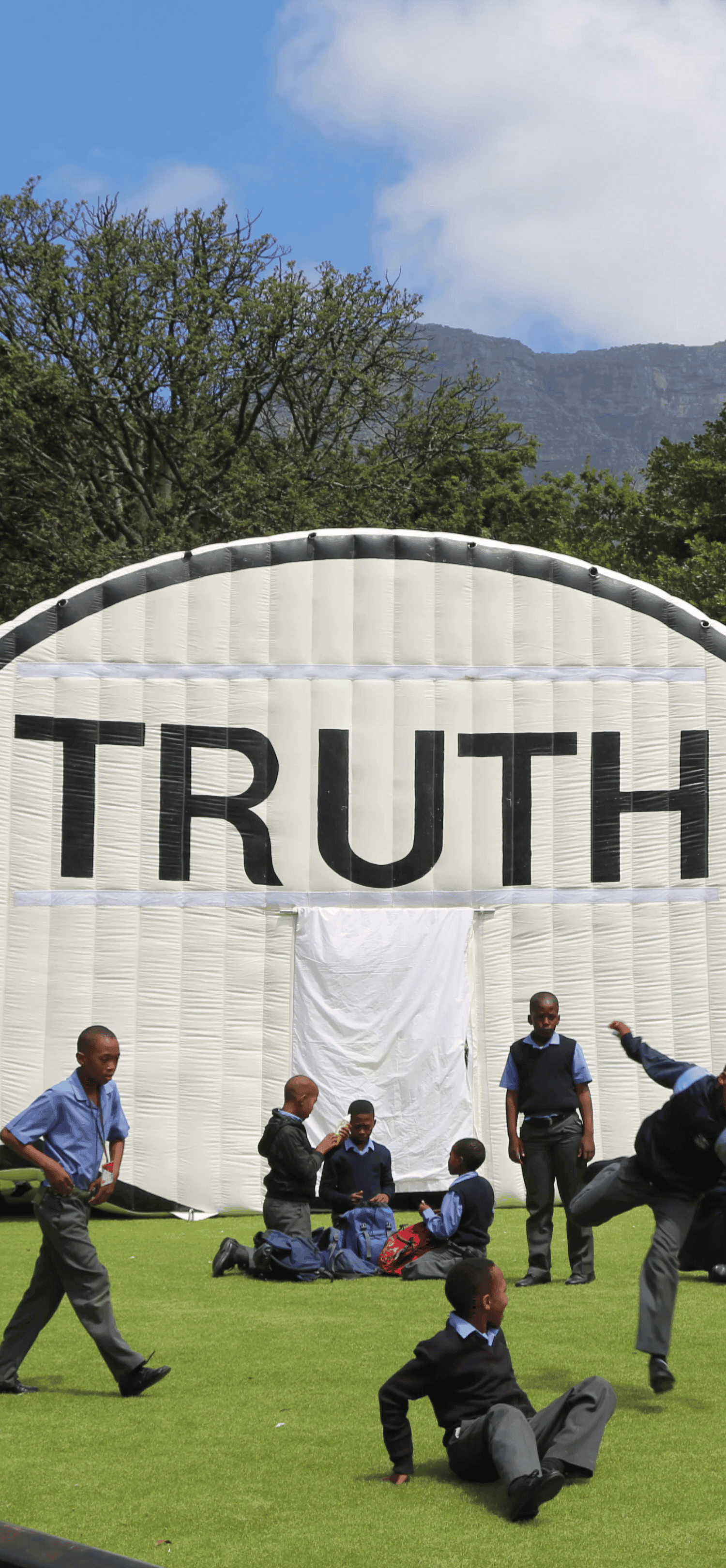
During the 2010 World Cup, the Goodman Gallery, in partnership with the Goethe Institute, IFAS, the City of Johannesburg, the Johannesburg Art Gallery, Iziko South African National Gallery, the Nirox Foundation, and the British Council, will host In Context, a series of exhibitions, installations, performances, and interventions in Johannesburg and Cape Town. In Context assembles
a remarkably diverse group of international and South African artists who share a rigorous commitment to the dynamics and tensions of place and space. The works – wide-ranging, often experimental, frequently provocative – engage with an array of pressing questions about space, context, and geographies that are at once intensely local and broadly global.
These engagements range from Hank Willis Thomas’s hard-hitting consideration of the effects of violence on family and community, to Jenny Holzer’s textual provocations on t-shirts and posters,
Steve McQueen’s dark analysis of mining in South Africa in his film Western Deep, Robin Rhode’s
witty deconstructions of public space, Willem Boshoff’s intense druidic musings on words and
meanings, and Douglas Gordon and Philippe Parreno’s extraordinary mediation on sport, celebrity
and the compelling green space of the football field in their film on Zinedine Zidane.
In Context seeks to bring artists working in a variety of media into a series of conversations
and engagements: with each other, with an extraordinary historical context – the World Cup in
South Africa – and with an audience not only of art lovers and artists but students, school learners,
and the general public. The series aims to do this by hosting events and exhibitions in venues such
as the Johannesburg Art Gallery, Iziko South African National Gallery, the Apartheid Museum,
and Goodman Gallery’s Project Space at Arts on Main, as well as in outdoor venues that include Joubert Park and the streets of Soweto and downtown Johannesburg. In addition to the exhibitions, screenings, and performances, In Context will feature public debates, walkabouts, artist’s talks, and discussions at various venues.
Nontsikelelo Veleko will be participating in 'Always Moving Forward: Contemporary African Photography 1/5/2010
Nontsikelelo Veleko will be participating in ‘Always Moving Forward: Contemporary African Photography’ from the Wedge Collection, Gallery 44 a feature exhibition of CONTACT, Toronto’s Annual Photography Festival.
David Goldblatt / The Jewish Museum (New York)
David Goldblatt will exhibit at The Jewish Museum (New York), from 02 May 2010 through to 19 September 2010. An exhibition of approximately 150 photographs by Goldblatt that focus on South Africa’s human landscape in the apartheid and post-apartheid eras.
Nontsikelelo Veleko / 7th Recontree Africaines de la Photographie exhibition - Bamako 2007
Nontsikelelo Veleko is included in the 7th Recontree Africaines de la Photographie exhibition – Bamako 2007 at Casa Africa, Las Palmas de Gran Canaria until 10 October. She is currently preparing for her solo show, Welcome to Paradise curated by Elvira Dyangani Ose, which is scheduled to open at Casa Africa on 19 November 2009.
The Joburg Art Fair / 26.03.2010–28.03.2010
The Goodman Gallery will exhibit at The Joburg Art Fair (26.03.2010–28.03.2010).
Le Moulin / Spheres
In October 2009, the Goodman Gallery will collaborate with Air de Paris, Galleria Continua, Gallerie Krinzinger, Kamel Mennour, Almine Rech Gallery and Ester Schipper to present Sphères, at Le Moulin, France.
The Goodman Gallery will be exhibiting work by Joel Andrianomearisoa, Kader Attia, Willem Boshoff, Claire Gavronsky, Frances Goodman, Thomas Mulcaire, Rose Shakinovsky, Mikhael Subotzky and Minnette Vári. The exhibition opens 24 October, and runs until 30 May 2010.
Thomas Mulcaire / 'CUE' at the Vancouver Art Gallery in Canada
Thomas Mulcaire’s work is currently being shown on the exhibition ‘CUE’ at the Vancouver Art Gallery in Canada from 22 January–21 March 2010. He has been invited to exhibit on the exhibition ‘Weiss’ at the Temporaeres Museum at Schloss Untergroeningen in Stuttgart, Germany from 9 May–19 September 2010.
David Goldblatt / Some Afrikaners Revisited at the Oliewenhuis Art Museum
David Goldblatt Goldblatt’s photographic essay Some Afrikaners Revisited will be exhibited at the Oliewenhuis Art Museum in Bloemfontein from 15 October 2009 – 10 January 2010. His solo exhibition Intersections Intersected: The Photography of David Goldblatt is still on view at the New Museum, New York until 11 October 2009.
Nontsikelelo Veleko, WELCOME TO PARADISE!, Casa Africa, Las Palmas, Spain
Nontsikelelo Veleko’s solo exhibition, WELCOME TO PARADISE! curated by Elvira Dyangani Ose opens on 3 December 2009 at Casa Africa, Las Palmas, Spain.
The exhibition will feature the most important works of the trajectory of this young South African photographer. The selection includes Wonderland, winner of the Standard Bank Young Artist Award (2008), along with a selection of works from her previous series, such as: The Ones on Top Won’t Make it Stop (2002), Beauty is in the Eyes of the Beholder (2004-04) and www.notblackenough.lolo (2003) — amongst others, projects from which Veleko gained recognition in the South African and international art scene.
Also on show will be a new body of work, created whilst in a residency on the Canary Islands earlier this year, as a guest of Casa Africa.
The exhibition is accompanied by a new monograph on the artist, edited by Ose, with contributions by Tracy Murinik, Sarah Nuttal, John Fleetwood, Carlos Pez and Tumelo Mosaka.
Adam Broomberg & Oliver Chanarin exhibit at at Musée de l'Elysée
Adam Broomberg & Oliver Chanarin’s solo show The Red House is on view at Musée de l’Elysée, Lausanne until 25 October 2009. They are also included in Prune: Abstracting Reality at Amsterdam Photography Museum (FOAM) from 18 Sep until 9 Dec 2009 and in Manipulating Reality at Palazzo Strozzi, Florence from 25 Sept until 17 January 2010.
Kentridge and Gerhard Marx / The Firewalker, a ten-metre high public sculpture
The Firewalker, a ten-metre high public sculpture commissioned by the City of Johannesburg from William Kentridge and Gerhard Marx, can be viewed at the southern end of Queen Elizabeth Bridge in the CBD.
David Golblatt is presented with prestigious Henri Cartier-Bresson Award
David Goldblatt has been awarded the prestigious Henri Cartier-Bresson Award (2009), for his project ‘TJ’, an ongoing examination of the city of Johannesburg. The award is intended for a photographer of exceptional ability who has an established career and has completed a significant body of work. This award will be followed by an exhibition of David Goldblatt’s essay of Johannesburg photographs at the Henri Cartier-Bresson in 2010.
Goldblatt has been photographing and documenting South African society for over 50 years. Born in Randfontein in 1930 to parents who came to South Africa to escape the persecution of Lithuanian Jews in 1890, he was simultaneously part of privileged white society and a victim of religious persecution and alienation. Motivated by his contradictory position in South African society, Goldblatt began photographing this society, and in 1963 decided to devote all of his time to photography.
Goldblatt’s work focuses on critical explorations of South African society. While he uses photography as a means of accessing and exploring people and societies, he is acutely aware of the ethics of photography, and has used the camera as a way of capturing the complexities and intricacies of the specific conditions and situations that he photographs. His photographs are neither propaganda nor violently provocative, but rather become complex, meditative documents that are open to interpretation and that permeate far more deeply, and for longer than the initial shock and violence associated with documentary and news photography.
David Goldblatt is currently showing a photographic essay entitled ‘Intersections Intersected’ at the New Museum, New York, U.S.A. This exhibition runs from 15 July to 11 October 2009.
Mikhael Subotzky received respected Leica Oskar Barnack Award
Mikhael Subotzky has been awarded the highly respected Leica Oskar Barnack Award for his Beaufort West essay. Selected by an international jury, the prize is awarded to a photographer who has the ability to capture and express the relationship between man and environment without being obtrusive while maintaining a poignant and strong vision throughout the series.
South African photographer Mikhael Subotzky was born in Cape Town in 1981, and achieved both international and South African acclaim for his final year project entitled Die Vier Hoeke – which consisted of an intricate study of the South African prison system. In 2007 Subotzky went on to photograph the town of Beaufort West, an area notoriously associated with violent crime and alcoholism. Exhibited as a solo show at Goodman Gallery Cape in August 2007, the series was then shown at MOMA, New York as part of their New Photography 2008 programme.
While documentary photography has influenced the way in which Subotzky works, he has moved away from the somewhat rigid role of documentation. His work shows a sensitive engagement with his subjects, and his images serve to inform and allow for a questioning of meaning.
Art Basel Miami Beach / 03.12.2009 - 06.12.2009
The Goodman Gallery will exhibit at Art Basel Miami Beach (03.12.2009 – 06.12.2009). Among the artists exhibiting are: Bili Bidjocka, Adam Broomberg and Oliver Chanarin, Hasan and Husain Essop, David Goldblatt, Frances Goodman, William Kentridge, Rosenclaire, Joachim Schöenfeldt, Mikhael Subotzky.
William Kentridge, Brett Murray and Sue Williamson at Spier
Goodman Gallery artists William Kentridge, Brett Murray and Sue Williamson have been selected to participate in Forward>March, one of two exhibition taking place at Spier as part of the 25th Anniversary of the End Conscription Campaign (ECC) celebrations. The exhibition takes as its starting point iconic works of resistance from the ECC era. David Goldblatt will feature in the photographic exhibition “Voices”, which aims to re-imagine the struggle years while exploring contemporary South Africa. The exhibitions will run from 30th October to 15th November 2009. Visit www.ecc25.org for more information.
Jodi Bieber’s First Prize at the Picture of the Year International 2009
Jodi Bieber has won First Prize Portrait Series with ‘Real Beauty’ at Picture of the Year International (POYI) in the USA, March 2009.
Minnette Vari / 5th VentoSul Biennale
Minnette Vári has been invited to participate in 5th VentoSul Biennale, a Latin-American Visual Arts Biennial held in Curitiba, Brazil on view until 4 November 2009.
Kathryn Smith and Nontsikelelo Veleko: 3rd AiM International Biennale
Kathryn Smith and Nontsikelelo Veleko will participate in the third AiM International Biennale, Marrakech 2009, curated by Abdellah Karoum opening on 19 November 2009.
Joel Andrianomearisoa at L’École Spéciale d’Architecture in Paris
Joel Andrianomearisoa is presenting a performance and installation titled Habillé, Déshabillé (Dress, Undress) for Regard Spécial sur la Turquie, which runs at the L’École Spéciale d’Architecture in Paris from 27 November until 18 December 2009.
Intersections Intersected / The Photography of David Goldblatt at the New Museum, New York
Over the last fifty years, David Goldblatt has documented the complexities and contradictions of South African society. His photographs capture the social and moral value systems that governed the tumultuous history of his country’s segregationist policies and continue to influence its changing political landscape. Goldblatt began photographing professionally in the early 1960s, focusing on the effects of the National Party’s legislation of apartheid. The son of Jewish Lithuanian parents who fled to South Africa to escape religious persecution, Goldblatt was forced into a peculiar situation, being at once a white man in a racially segregated society and a member of a religious minority with a sense of otherness. He used the camera to capture the true face of apartheid as his way of coping with horrifying realities and making his voice heard. Goldblatt did not try to capture iconic images, nor did he use the camera as a tool to entice revolution through propaganda. Instead, he reveals a much more complex portrait, including the intricacies and banalities of daily life in all aspects of society. Whether showing the plight of black communities, the culture of the Afrikaner nationalists, the comfort of white suburbanites, or the architectural landscape, Goldblatt’s photographs are an intimate portrayal of a culture plagued by injustice.
In Goldblatt’s images we can see a universal sense of people’s aspirations, making do with their abnormal situation in as normal a way as possible. People go about their daily lives, trying to preserve a sense of decency amid terrible hardship. Goldblatt points out a connection between people (including himself) and the environment, and how the environment reflects the ideologies that built it. His photographs convey a sense of vulnerability as well as dignity. Goldblatt is very much a part of the culture that he is analyzing. Unlike the tradition of many documentary photographers who capture the “decisive moment,” Goldblatt’s interest lies in the routine existence of a particular time in history.
Goldblatt continues to explore the consciousness of South African society today. He looks at the condition of race relations after the end of apartheid while also tackling other contemporary issues, such as the influence of the AIDS epidemic and the excesses of consumption. For his “Intersections Intersected” series, Goldblatt looks at the relationship between the past and present by pairing his older black-and-white images with his more recent color work. Here we may notice photography’s unique association with time: how things were, how things are, and also that the effects of apartheid run deep. It will take much more time to heal the wounds of a society that was divided for so long. Yet, there is a possibility for hope, recognition of how much has changed politically in the time between the two images, and a potential optimism for the future. Goldblatt’s work is a dynamic and multilayered view of life in South Africa, and he continues to reveal that society’s progress and incongruities.
—Joseph Gergel, Curatorial Fellow
